Physical Address
304 North Cardinal St.
Dorchester Center, MA 02124
Physical Address
304 North Cardinal St.
Dorchester Center, MA 02124

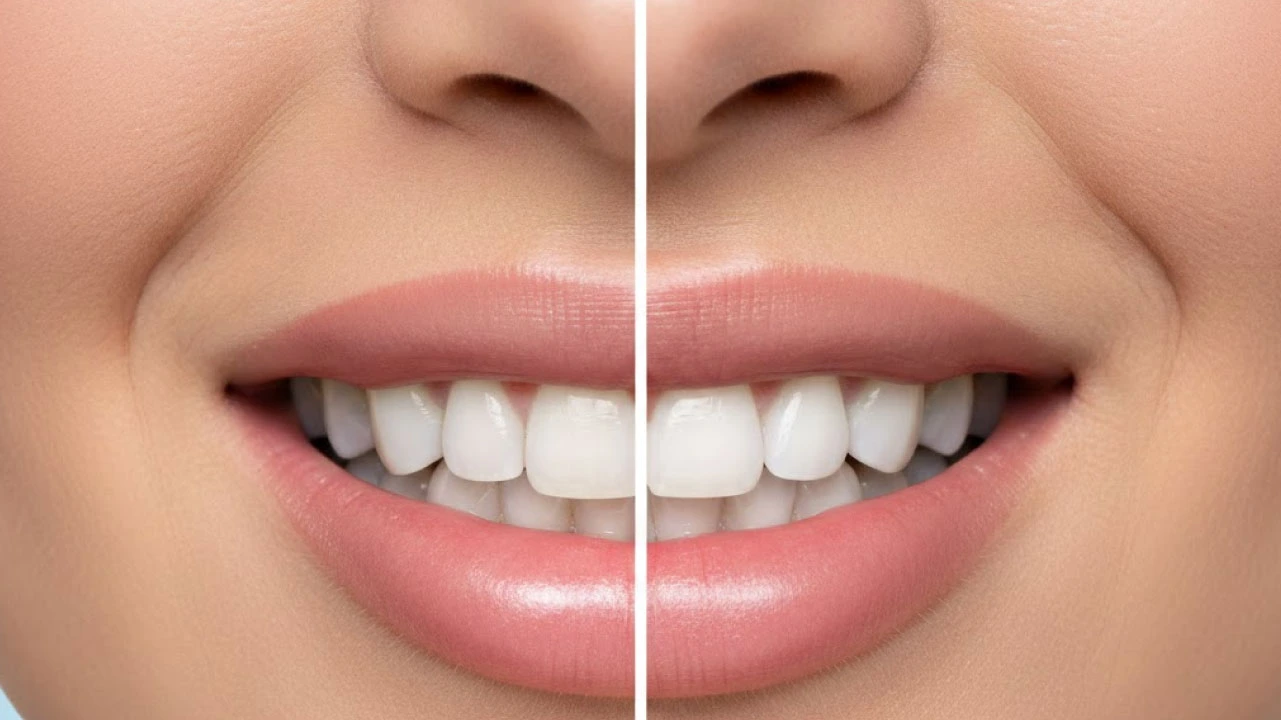
Everyone has a unique gumline. Some people have a high gumline that shows less tooth surface. Others have a low gumline that exposes more tooth. Many have an uneven gumline where some teeth appear longer or shorter than others.
Gum contouring, also known as gingival sculpting or gingivoplasty, reshapes your gumline to create a more balanced appearance. A periodontist or cosmetic dentist performs this procedure to remove excess gum tissue or restore areas with gum recession. The main benefits include improved smile aesthetics, better oral hygiene access, and in some cases, treatment for periodontal disease.
The procedure has 2 primary applications: cosmetic enhancement for people unhappy with their smile, and medical treatment when gum issues affect oral health. A gum contouring procedure involves either tissue removal using a soft tissue laser or scalpel, or tissue grafting from your palate to cover receding areas.
This article explains what gum contouring is, when it becomes medically necessary, what the procedure involves, pain levels during treatment, recovery time, and typical costs.
Gum contouring is a dental procedure that reshapes your gumline by removing excess tissue or restoring receded gums. A periodontist (gum specialist) or cosmetic dentist performs this in-office treatment.
The procedure targets the gum tissue around your teeth. If you have excessive gum tissue that covers too much of your teeth, the doctor removes it to expose more tooth structure. This creates a longer, more proportional appearance. If you have gum recession where tissue has pulled away, the procedure adds tissue to cover exposed roots.
According to the American Dental Association, procedures such as gingivectomy and gingivoplasty are commonly used to improve both gum health and smile aesthetics.

Gum contouring is typically an elective procedure, meaning you choose to have it done for cosmetic purposes to improve your smile. However, gum contouring also becomes medically necessary in some situations involving periodontal disease.
Recommended read: Best Organic Products for Gum Regrowth Reviews: Honest Results & Buyer’s Guide
The terms dentists use for this procedure include:
Gum contouring becomes medically necessary when periodontal disease or other oral health conditions require surgical intervention. In these cases, it’s no longer just a cosmetic choice.
The National Institute of Dental and Craniofacial Research explains that advanced periodontal disease can destroy gum tissue and bone, sometimes requiring surgical procedures to reduce pocket depth and restore oral health.
Periodontal disease creates deep pockets between your gums and teeth where bacteria collect. If nonsurgical treatments like antibiotics and deep dental cleanings don’t eliminate the infection, your dentist may recommend pocket reduction surgery. This procedure removes excess gum tissue to reduce pocket depth and make cleaning easier.
Other medically necessary situations include:
When gum contouring addresses these medical issues, dental insurance may cover part of the cost. You’ll need to check with your provider about coverage specifics.

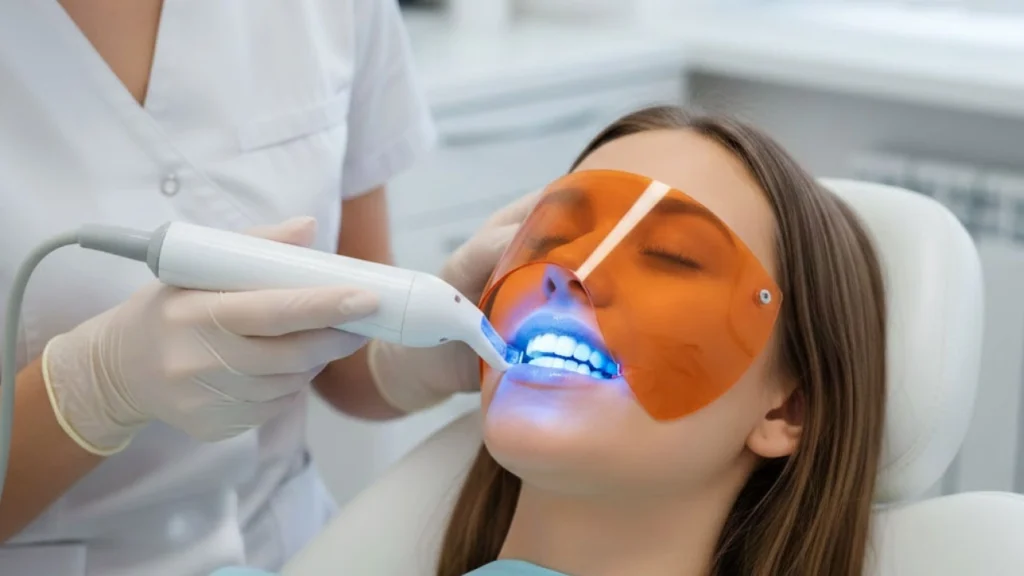
A periodontist or cosmetic dentist performs gum contouring as an in-office procedure, typically completed in 1 visit lasting 1 to 2 hours.
Before starting, the doctor applies local anesthesia to numb your gums completely. You remain awake but feel no pain during the tissue removal.
The procedure follows 1 of 2 approaches based on your needs:
For excess gum tissue:
For gum recession:
Soft tissue lasers offer advantages over scalpels, including less bleeding, reduced need for sutures, and faster healing. However, both methods produce effective results when performed by an experienced periodontist.
Research and clinical guidance from the Harvard School of Dental Medicine notes that laser-assisted gum procedures may reduce bleeding and promote faster healing compared to traditional scalpel techniques.
More from our blog: Natures Smile Reviews for Receding Gums: Can It Reverse Gum Damage?
No, you won’t feel pain during the procedure because local anesthesia numbs your gums completely. You’ll only feel pressure and movement while the doctor works.
After the anesthesia wears off, you can expect some tenderness and discomfort. The amount depends on how much tissue was removed or grafted. Most patients describe it as mild to moderate soreness rather than sharp pain.
To manage post-procedure discomfort:
Your doctor may prescribe stronger pain medication if they anticipate significant discomfort. Follow their recommendations based on your specific situation.
Gum contouring recovery takes 2 to 4 weeks for complete healing, though most people return to normal activities within 2 to 3 days.
The first few days require the most care. Your gums will feel tender and sensitive. Stick to soft foods for at least 2 to 3 days after the procedure. Good options include:
Your doctor will schedule a follow-up appointment 5 to 10 days after the procedure to check healing and remove any sutures. They may prescribe an antibiotic mouth rinse to prevent infection.
Signs of infection to watch for include:
Most swelling subsides within the first week. Complete tissue healing takes several weeks, during which you’ll need to brush gently around the treated areas and avoid flossing until your dentist says it’s safe.
Latest articles: How To Reverse Aging By Keeping Your Teeth Healthy?
Gum contouring costs range from $50 to $350 per tooth, or $500 to $3,000 for all front top teeth. The final price depends on several factors.
Since gum contouring is often a cosmetic procedure, dental insurance typically doesn’t cover it. You’ll pay out of pocket in these cases. The cost varies based on:
If your dentist recommends gum contouring for medical reasons like periodontal disease, insurance may cover part of the cost. Contact your provider before scheduling to understand your coverage and out-of-pocket expenses.
Many dental offices offer payment plans or financing options through third-party healthcare lenders. Ask about these options if the upfront cost concerns you.
Gum contouring, also called gingival sculpting or gingivoplasty, reshapes your gumline to improve smile appearance or address oral health issues. The procedure removes excess gum tissue to expose more tooth or adds tissue to cover receded areas.
A periodontist or cosmetic dentist performs gum contouring in about 1 to 2 hours using local anesthesia. Recovery involves several days of soft foods and gentle care, with complete healing in 2 to 4 weeks.
When done for cosmetic reasons, you’ll pay $50 to $3,000 out of pocket depending on treatment extent. If gum contouring becomes medically necessary for periodontal disease or other health conditions, dental insurance may cover part of the cost.